
Most people come to Kolhapur for one reason: darshan at the Mahalaxmi Temple. They queue for two hours, buy a pair of chappals on Mahadwar Road, and leave by lunch. That’s the mistake. Within 60 km of that temple sit a hill fort where Shivaji Maharaj escaped a siege, a 12th-century temple with no Nandi at its door, a bison sanctuary, and some of the spiciest mutton curry in India.
This guide to the best places to visit in Kolhapur covers the city’s top sights, the day trips worth your fuel, what to eat (and where), and a realistic 2-day plan with 2026 timings and costs. Kolhapur sits about 230 km south of Pune and 210 km from Goa, so it also slots neatly into a longer Konkan or Goa road trip.
Whether you’re a pilgrim, a history buff or just hungry, these Kolhapur tourist places will fill your days. Start where the whole city starts: at the temple.
Best Places to Visit in Kolhapur City
Mahalaxmi Temple (Ambabai Temple)
Locals call the goddess Ambabai, and the temple is one of the Shakti Peethas, which makes Kolhapur a major pilgrimage stop for travellers from across India. The black-stone Hemadpanthi-style structure dates back to the Chalukya era, and the carved outer walls reward a slow walk around them.
The temple opens around 4 am, with the Kakad Aarti between 5:30 and 6 am and the Shej Aarti at about 10:15 pm. Go early on a weekday: by 9 am on weekends and Fridays, queues can stretch past two hours. Check the temple trust’s website for any changes before you go.
If you can time it, visit during Kiranotsav (festival of rays) – a few days each November and again in late January-early February, when the setting sun’s rays travel through the temple and fall directly on the idol.
New Palace (Shahu Chhatrapati Museum)
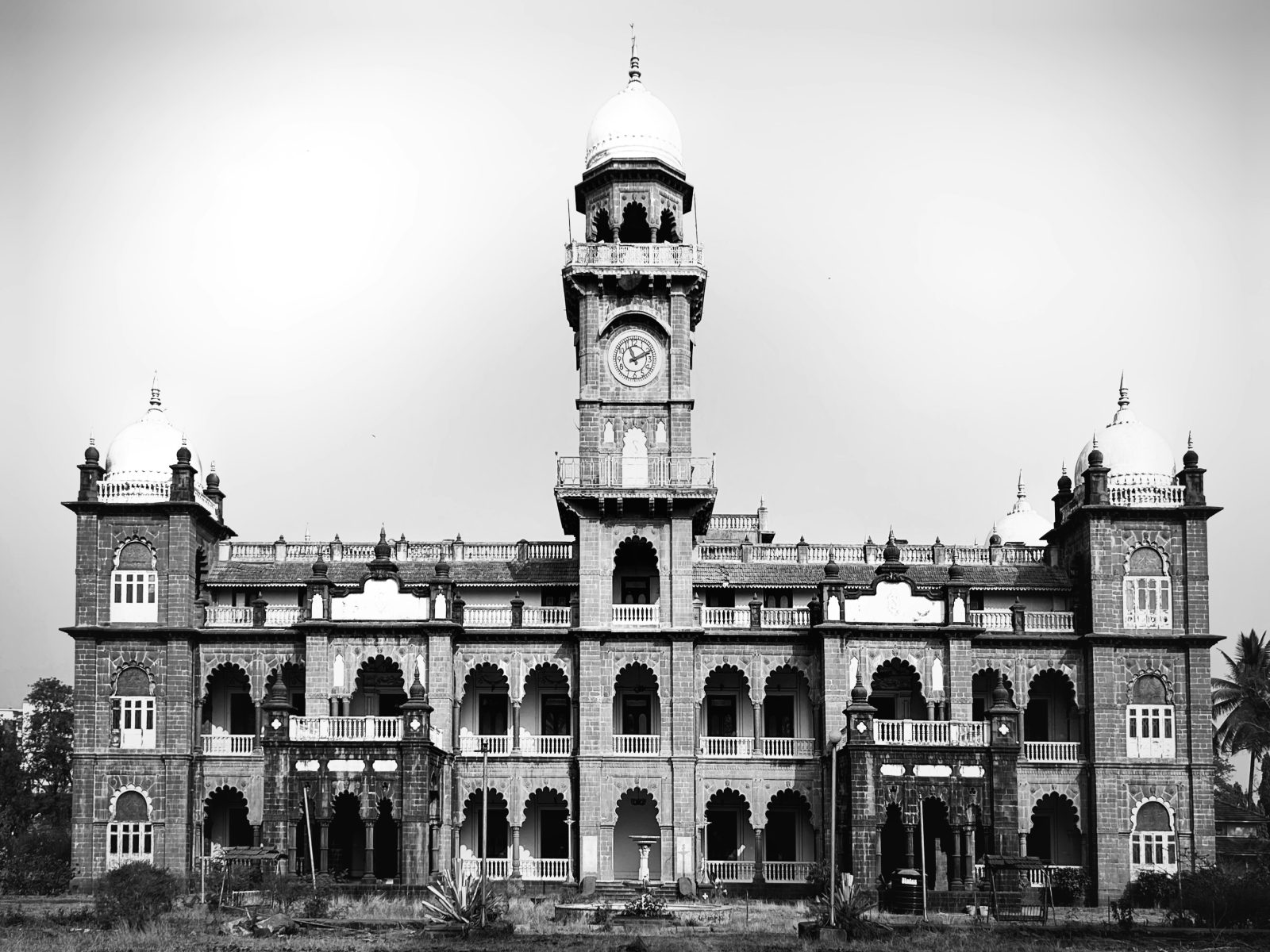
Built in the 1880s in black polished stone, the New Palace mixes Jain, Hindu, Rajasthani and Gujarati styles, with a clock tower that’s become a Kolhapur landmark. The royal family still lives in part of it. The rest is a museum of weapons, hunting trophies, royal costumes and the Durbar Hall throne. Entry is around ₹40 for adults and ₹20 for children (2026), and it’s open daily from about 10:30 am to 5:30 pm.
Rankala Lake
Kolhapur’s evening living room. Walk the promenade, take a pedal boat, and eat bhel or pani puri at the chowpatty stalls. Sunset is the time to come, and weekdays are calmer than Sundays.
Bhavani Mandap and Town Hall Museum
Two quick heritage stops near the temple. Bhavani Mandap was once the royal court of Kolhapur’s rulers; the Town Hall Museum, set in a 19th-century Neo-Gothic building with a small garden, holds sculptures, paintings and archaeological finds from the region – including pieces dug up at nearby Brahmapuri.
The city sights fill a day. The forts and temples outside the city are why you should stay for two.
Places to Visit Near Kolhapur: Forts, Temples and Day Trips
Panhala Fort (about 20 km)
If you only do one trip out of the city, make it Panhala. It’s one of the largest forts in the Deccan, perched at around 975 m, and it was here in 1660 that Shivaji Maharaj slipped out of Siddi Jauhar’s siege on a rain-soaked night. Baji Prabhu Deshpande held the pass behind him at Pavankhind – a story every Maharashtrian schoolchild knows.
Highlights include the Teen Darwaza (triple gateway), the Andhar Bavdi (a hidden three-storey stepwell), the massive Ambarkhana granaries and the Sajja Kothi pavilion. Panhala is also a small hill station, so it’s cooler than the city – ideal for a half-day escape. Hire a local guide at the entrance for ₹300-500 (2026); the stories make the walls come alive.
Jyotiba Temple (about 18 km)
Set on a hilltop off the Panhala road, the Jyotiba Temple is dedicated to a local form of Shiva and Vishnu. On Sundays and during the Chaitra Purnima fair, the whole hill turns pink as devotees throw gulal (coloured powder). Combine it with Panhala in a single morning.
Siddhagiri Gramjivan Museum, Kaneri Math (about 12 km)
This is the surprise hit of most Kolhapur trips. The open-air museum recreates life in a pre-industrial Indian village with hundreds of life-size sculptures – potters, blacksmiths, farmers, a village school and more. Kids love it, and adults usually spend longer than they planned. Budget 2-3 hours.
Kopeshwar Temple, Khidrapur (about 60 km)
Built in the 12th century by the Shilahara dynasty, this Shiva temple on the banks of the Krishna has some of the finest stone carving in Maharashtra. Its Swarga Mandap has an open circular roof, the sanctum holds both Shiva and Vishnu, and, unusually for a Shiva temple, there’s no Nandi bull facing the shrine. Few tourists make the drive, which is exactly why you should.
Narsobawadi (about 45 km)
A riverside pilgrimage town at the confluence of the Krishna and Panchganga rivers, associated with Shri Dattatreya. Try the town’s famous basundi and pedha while you’re there.
History done, it’s time for the hills.
Nature Escapes Around Kolhapur
Kolhapur sits at the foot of the Sahyadris, and the forests to the west get some of the heaviest rain in Maharashtra. From June to September, the whole district turns green.
Radhanagari Wildlife Sanctuary and Dajipur (about 55-80 km)
Maharashtra’s first wildlife sanctuary, set up in 1958, is better known as the Dajipur Bison Sanctuary. Gaur (Indian bison) are the stars, but you may also spot sambar, barking deer and giant Malabar squirrels. On the way, stop at the Radhanagari Dam, built by Chhatrapati Shahu Maharaj, with its automatic gates. Monsoon is lush but leechy; October to February is better for wildlife spotting.
Gaganbawda (about 55 km)
A quiet hill station on the edge of the Western Ghats, with valley views from Gagangad fort and waterfalls along the ghat road in the monsoon. Think of it as a far less crowded Mahabaleshwar.
Amba Ghat (about 60 km)
The road from Kolhapur towards Ratnagiri winds through Amba Ghat, a favourite monsoon drive with viewpoints, mist and waterfalls. Stop at a roadside tapri (tea stall) for chai and kanda bhaji.
All that walking and driving builds an appetite. Kolhapur will take care of it.
Things to Do in Kolhapur: Eat, Shop and Explore
What to eat in Kolhapur
Kolhapur food is famous across Maharashtra for one thing: heat. The signature meal is a Kolhapuri mutton thali with two gravies – tambda rassa (fiery red mutton curry) and pandhra rassa (a white, coconut-based mutton broth that cools you down). A good thali costs around ₹300-500 in 2026. Opal Hotel and Parakh are long-standing local names; ask around for the current favourite, because Kolhapur argues about this endlessly.
Vegetarians aren’t left out:
- Kolhapuri misal – sprouted moth beans in a spicy kat (thin gravy), topped with farsan and served with pav. Expect ₹80–150 a plate.
- Rankala bhel and pani puri – the classic evening snack.
- Kolhapuri jaggery (gul) – the region is one of India’s biggest jaggery producers. Buy a block to take home.
- Lassi and dahi – the cooling answer to everything you just ate.
What to shop for
- Kolhapuri chappals – the city’s GI-tagged leather sandals. Mahadwar Road and Chappal Line near the temple are lined with shops; prices start around ₹500 and go well past ₹2,000 for hand-stitched pairs. Bargain politely, and check the stitching rather than just the shine.
- Kolhapuri saaj – a traditional gold necklace worn by Maharashtrian brides; even if you don’t buy, the jewellery shops near the temple are worth a look.
- Kolhapuri masala – the spice blend behind all that heat, sold loose or packed in the markets.
Catch a kusti (wrestling) bout
Kolhapur is the heartland of traditional Indian wrestling, and its talims (wrestling gyms) still train wrestlers in red-earth pits. Visit Motibag Talim early in the morning to watch training, or check local listings for a kusti competition during your visit.
Now let’s fit it all into a plan.
Kolhapur 2 Day Itinerary
Day 1: Kolhapur city
- 6:00 am – Mahalaxmi Temple darshan before the crowds.
- 8:00 am – Misal breakfast near the temple.
- 9:30 am – Bhavani Mandap and the Town Hall Museum.
- 11:00 am – New Palace museum.
- 1:00 pm – Kolhapuri mutton or veg thali for lunch, then a rest.
- 4:00 pm – Shop for chappals on Mahadwar Road.
- 6:00 pm – Sunset at Rankala Lake with bhel.
Day 2: Forts and village museum
- 7:00 am – Drive to Jyotiba Temple (about 40 minutes).
- 9:30 am – Panhala Fort with a guide.
- 1:00 pm – Lunch in Panhala.
- 3:00 pm – Siddhagiri Gramjivan Museum at Kaneri Math.
- Evening – Back in the city for a final round of lassi.
Got a third day? Pick Kopeshwar Temple and Narsobawadi for history, or Radhanagari and Dajipur for wildlife.
▸ Quick Facts: Best Places to Visit in Kolhapur
- Best time to visit: October to February for pleasant weather (15-30°C); June to September for green hills and waterfalls; avoid April-May, when afternoons cross 38°C.
- Budget: ₹1,500=3,500 per person per day in 2026 for a mid-range hotel, food and local transport. Taxi for a full-day Panhala-Jyotiba-Kaneri loop: around ₹2,000-3,000.
- How to get there:
- Train: Chhatrapati Shahu Maharaj Terminus (Kolhapur) connects to Mumbai via the Mahalaxmi Express and Koyna Express. The Pune-Kolhapur Vande Bharat (20673/20674) covers 326 km in about 5.5 hours.
- Road: About 230 km (4.5-5 hours) from Pune and 375 km from Mumbai on the Mumbai-Bengaluru highway (NH 48).
- Air: Kolhapur Airport (KLH), about 10 km from the city, has direct flights to a handful of cities including Bengaluru and Hyderabad. Check current schedules, as routes change.
- Getting around: Auto-rickshaws in the city; hire a taxi for day trips.
Do’s
- Reach Mahalaxmi Temple before 7 am, especially on Fridays, Sundays and during Navratri.
- Ask for “kami tikhat” (less spicy) if you can’t handle heat – and still keep a lassi close.
- Hire a local guide at Panhala; the fort’s best stories aren’t on the signboards.
Don’ts
- Don’t wear shorts or sleeveless tops to the Mahalaxmi Temple – security checks are strict, and modest dress avoids trouble at the gate.
- Don’t buy the first shiny pair of chappals you see; genuine Kolhapuris are soft, flexible and hand-stitched.
- Don’t attempt Radhanagari forest trails in peak monsoon without leech socks.
▸ FAQ
Q: What are the best places to visit in Kolhapur? A: The best places to visit in Kolhapur are the Mahalaxmi Temple, New Palace museum, Rankala Lake, Panhala Fort, Jyotiba Temple and the Siddhagiri Gramjivan Museum at Kaneri Math. With more time, add Kopeshwar Temple at Khidrapur, Narsobawadi, and the Radhanagari-Dajipur bison sanctuary for wildlife.
Q: How many days are enough for Kolhapur? A: Two days cover the highlights: one for the city (Mahalaxmi Temple, New Palace, Rankala Lake) and one for Panhala, Jyotiba and Kaneri Math. Add a third day if you want Kopeshwar Temple, Narsobawadi or Radhanagari’s wildlife sanctuary.
Q: What is the best time to visit Kolhapur? A: October to February is the most comfortable, with temperatures between roughly 15°C and 30°C. The monsoon (June-September) is great for Panhala, Amba Ghat and waterfalls, but expect heavy rain. Avoid April and May, when afternoons get very hot.
Q: What food is Kolhapur famous for? A: Kolhapur is famous for its spicy mutton, served with tambda rassa (red curry) and pandhra rassa (white coconut broth). Vegetarians should try Kolhapuri misal, Rankala bhel and the region’s jaggery. A mutton thali costs around ₹300-500 in 2026.
Q: How far is Panhala Fort from Kolhapur? A: Panhala Fort is about 20 km north-west of Kolhapur, roughly a 40-minute drive. Most visitors combine it with the Jyotiba Temple, which is on a nearby hill, in a half-day trip by taxi or private car.
Q: Is Kolhapur safe for solo travellers? A: Yes, Kolhapur is generally safe and welcoming, including for solo and women travellers. Temple areas get very crowded, so watch your belongings in queues. Use registered autos or app cabs at night, and dress modestly when visiting temples.
Plan Your Kolhapur Trip
Kolhapur rewards people who stay past lunch. Give it two days: one for the goddess, the palace and Rankala’s sunset, and one for Panhala’s walls, Jyotiba’s pink hilltop and a village museum full of clay potters. Eat the tambda rassa at least once, even if you have to ask for kami tikhat. Book the Pune Vande Bharat or the overnight Mahalaxmi Express, and plan a third day if the bison of Dajipur are calling.
Come for the darshan. Stay for the second plate of misal.
