
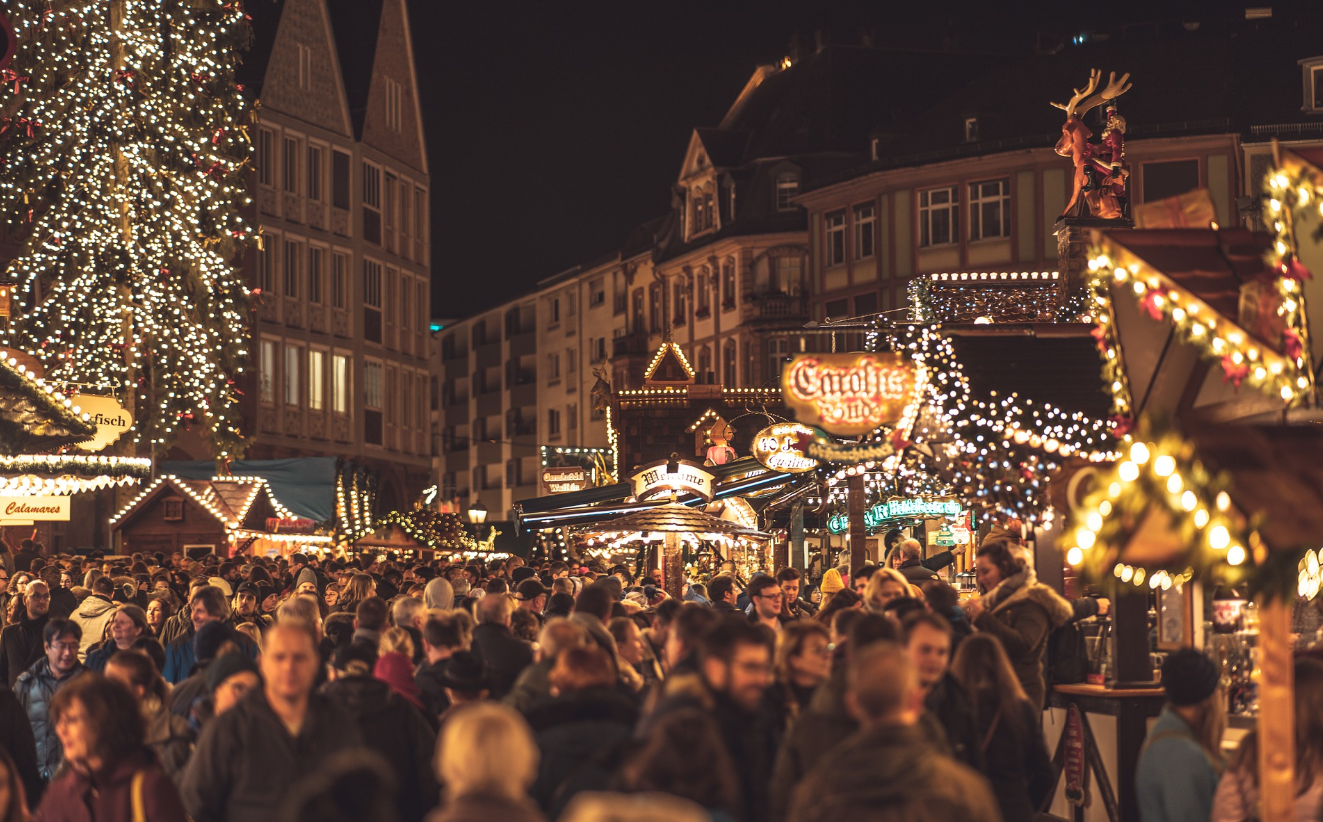
Most guides hand you a list of twenty markets and wish you luck. That’s how first-timers end up queuing for forty minutes at the same Glühwein stand in Cologne and missing the small-town markets that locals actually rate. Here’s what those lists don’t tell you: four or five markets, chosen well and visited in the right order, beat twenty rushed ones.
This guide to the best Christmas markets in Germany covers the confirmed 2026 dates (several markets have shifted their schedules this year), what each one does better than the rest, what to eat and buy, and how to string them together.
Germany invented the Weihnachtsmarkt (Christmas market). Records of winter markets reach back to the 1300s, and Dresden’s permit for a market in the run-up to Christmas dates to 1434. Six centuries on, the formula is recognisably the same: wooden huts, hot spiced wine, gingerbread, carols, and a town square that smells of cinnamon and grilled sausage. Each city just does it a little differently – and that difference is the whole point.
The Big Three: Best Christmas Markets in Germany for First-Timers
If you only have a week, build it around Nuremberg, Dresden and Cologne. Between them they show you three sides of the German tradition: strict heritage, deep history and sheer variety.
Nuremberg Christkindlesmarkt – the benchmark
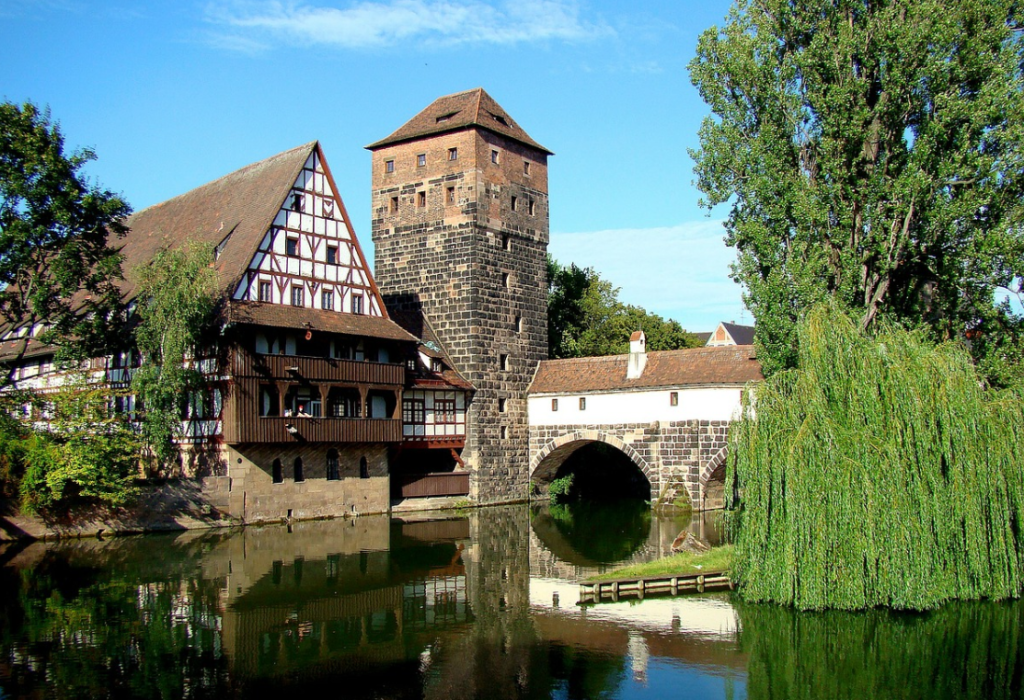
The city calls it the “Städtlein aus Holz und Tuch” (little town of wood and cloth): up to 180 stalls with red-and-white fabric roofs set out on the Hauptmarkt, between the Gothic Frauenkirche and the gilded Schöner Brunnen fountain. More than two million people visited in 2025.
The season opens with a ritual unchanged for decades. On the Friday before the first Sunday of Advent, the Nuremberg Christkind – a young local woman elected for a two-year term, dressed in gold with a crown – reads a prologue from the church balcony to a silent, packed square. Arrive by 4:30 pm if you want to see her.
What sets Nuremberg apart is its strictness. Organisers favour traditional, regional goods, so plastic tat is rare. Look for:
- Nürnberger Lebkuchen – the city’s honey-and-nut gingerbread, sold in decorative tins.
- Zwetschgenmännle – little figures made from dried prunes, walnuts and figs, a Nuremberg oddity since the 1700s.
- “Drei im Weggla” – three finger-sized Nuremberg bratwursts in a bread roll. Order it exactly like that.
Two side markets are worth your time. The Market of Partner Cities on Rathausplatz brings food and crafts from Nuremberg’s twin towns around the world, and the Children’s Christmas Market has a carousel, a small Ferris wheel and a bakery where kids decorate their own biscuits.
2026 dates: 27 November – 24 December, daily 10 am–9 pm (Christmas Eve until 2 pm).
Dresden Striezelmarkt – the oldest
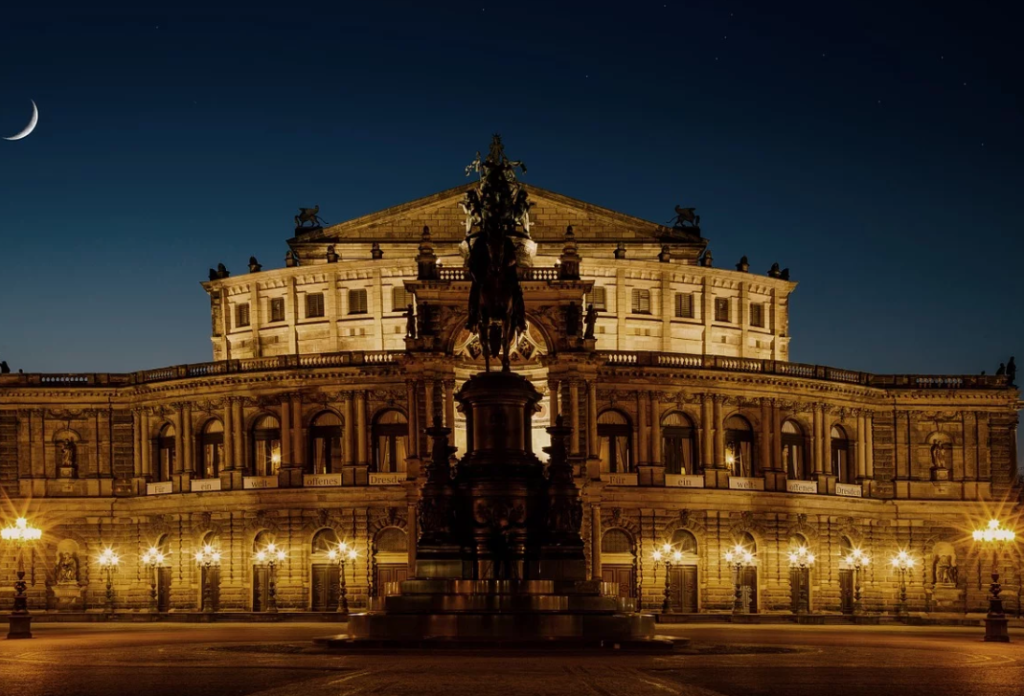
Dresden’s market runs for the 592nd time in 2026, with 216 stalls on the Altmarkt. The name comes from “Striezel”, the old word for Stollen – the dense, butter-and-fruit Christmas bread that Dresden treats almost as a religion. The mayor opens the market on 25 November at 4 pm by cutting the first Stollen of the season.
Dresden is also the gateway to the Erzgebirge (Ore Mountains), the home of German wooden folk art. This is the place to buy a hand-turned nutcracker, a Räuchermann (incense smoker figure shaped like a little man) or a candle-powered Christmas pyramid that spins as the heat rises. Check for a “Erzgebirge” origin mark – cheaper imports look similar on the shelf.
If you’re in town on the second Saturday of Advent, watch for the Stollenfest, when a giant Stollen is paraded through the old town and sliced up for the crowd.
2026 dates: 25 November – 24 December.
Cologne – seven markets, one cathedral
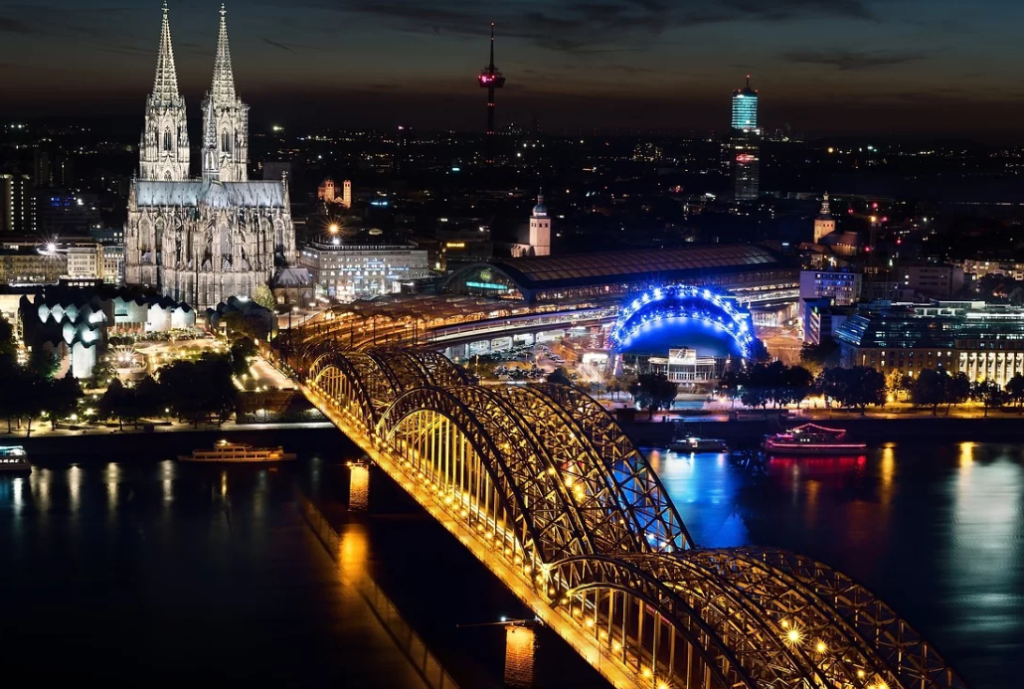
Cologne doesn’t do one market; it does seven, most within a 20-minute walk of each other. The headline act sits on Roncalliplatz at the foot of the cathedral, under a canopy of fairy lights strung from a giant tree, with more than 100 free stage performances through the season. Since this year it has also been ISO-certified as a sustainable event.
From there, work your way through the rest:
- Heinzels Wintermärchen (Alter Markt and Heumarkt) – themed around the Heinzelmännchen, Cologne’s folklore house-elves, with an ice rink on the Heumarkt.
- Markt der Engel (Market of Angels) on Neumarkt – white lights and roaming “angels” on stilts.
- Hafen-Weihnachtsmarkt (Harbour market) beside the Chocolate Museum on the Rhine, with a maritime theme.
- Stadtgarten – smaller, cosier, popular with locals after work.
2026 dates: Cathedral market 16 November – 23 December. The Harbour market runs until 3 January 2027 and Heumarkt until 10 January 2027 – useful if you’re travelling over New Year.
Big-City Christmas Markets: Munich, Frankfurt, Stuttgart, Hamburg and Berlin
Frankfurt and Munich are Germany’s biggest air hubs, so there’s a good chance your trip starts in one of them. Both run first-rate markets – your first evening is sorted.
Munich – opening earlier in 2026
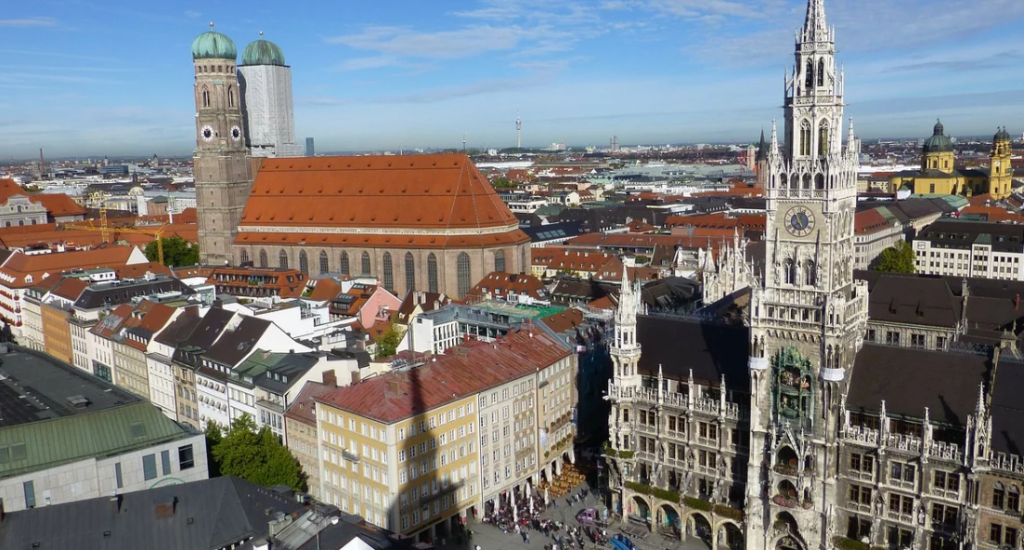
Big change this year: the Münchner Christkindlmarkt on Marienplatz now starts on the Friday before Totensonntag (Germany’s Sunday of remembrance), which means 20 November – 24 December 2026 – almost a week longer than before. Around 137 stalls fill Marienplatz and Rindermarkt beneath the Neo-Gothic town hall and a tree roughly 25 metres tall. Every evening, live Advent music drifts down from the town hall balcony.
Munich rewards wandering beyond the main square:
- Kripperlmarkt by St. Peter’s church – probably Germany’s largest nativity market, selling everything from hand-carved figures to tiny moss and bark for building your own crib scene.
- Krampuslauf – around 300 Krampuses, the horned, fur-clad companions of St. Nicholas, rampage through the old town on one Sunday in Advent. Kids will either love it or hide behind you.
- Medieval Christmas Market (20 November – 23 December) – stall holders in costume, mead and flatbreads.
- Tollwood Winter Festival (24 November – 23 December) – organic food, live music and art tents on the Theresienwiese, the Oktoberfest grounds.
- Pink Christmas (20 November – 20 December) – Munich’s LGBTQ+ market in the Glockenbachviertel.
Frankfurt – one market, one long river walk
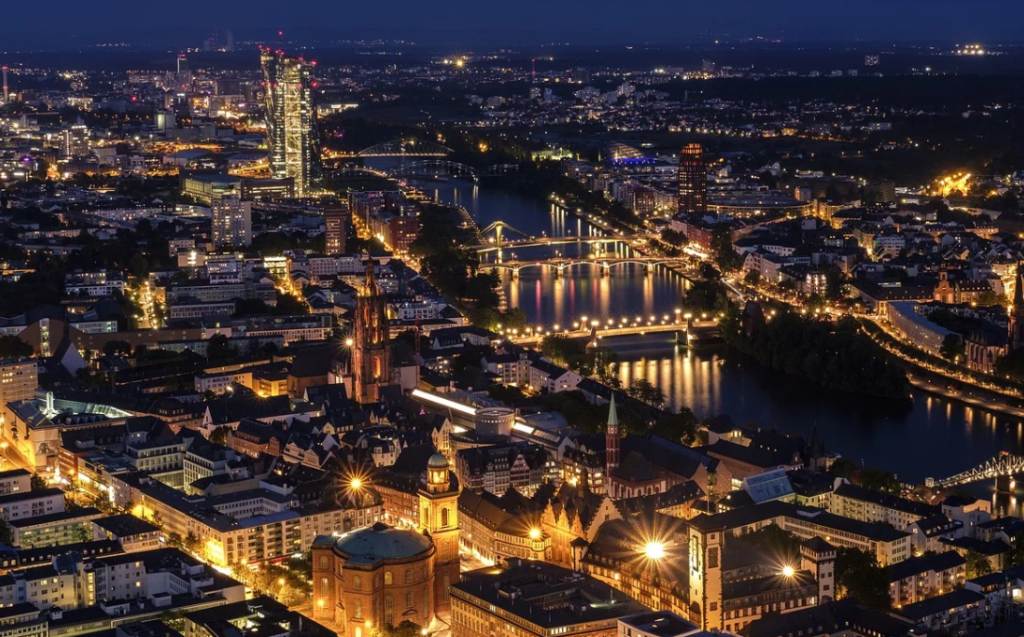
Frankfurt’s market dates back to 1393 and spreads from the Römerberg across Paulsplatz to the River Main. Look up at the 30-metre tree, then try the two local specialities: Bethmännchen (marzipan and almond balls) and hot Apfelwein (apple wine) – Frankfurt’s own drink and a sharper, fruitier alternative to Glühwein. The artisans’ market at Paulsplatz is calmer than the Römerberg on busy evenings, and there’s an ice rink on Roßmarkt.
2026 dates: 23 November – 22 December.
Stuttgart – judge the rooftops
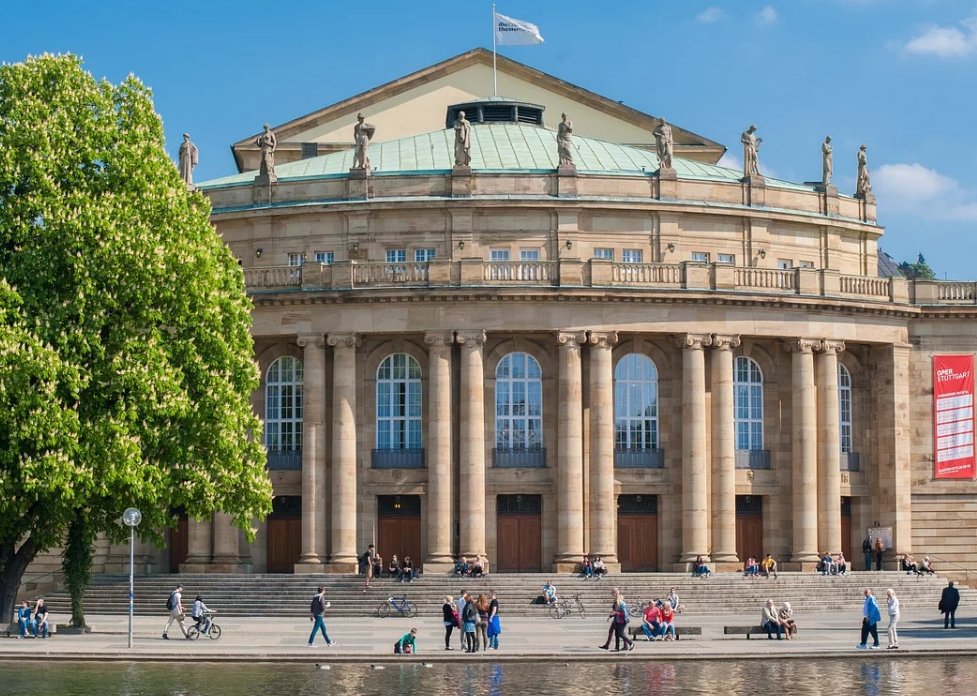
Stuttgart drew around 3.5 million visitors in 2025, with roughly 250 stalls across Schlossplatz, Marktplatz, Schillerplatz and Karlsplatz. The quirk here is the rooftops: stall holders compete each year for the most elaborately decorated hut roof – snow scenes, angels, moving figures. Look up as much as you look at the goods.
Karlsplatz hosts an antiques and curiosities market, there’s a Finnish Christmas village, and the Old Palace courtyard holds choir concerts most evenings. Eat Maultaschen – Swabian pasta pockets usually filled with meat and spinach.
2026 dates: 25 November – 23 December.
Hamburg – circus meets Christmas
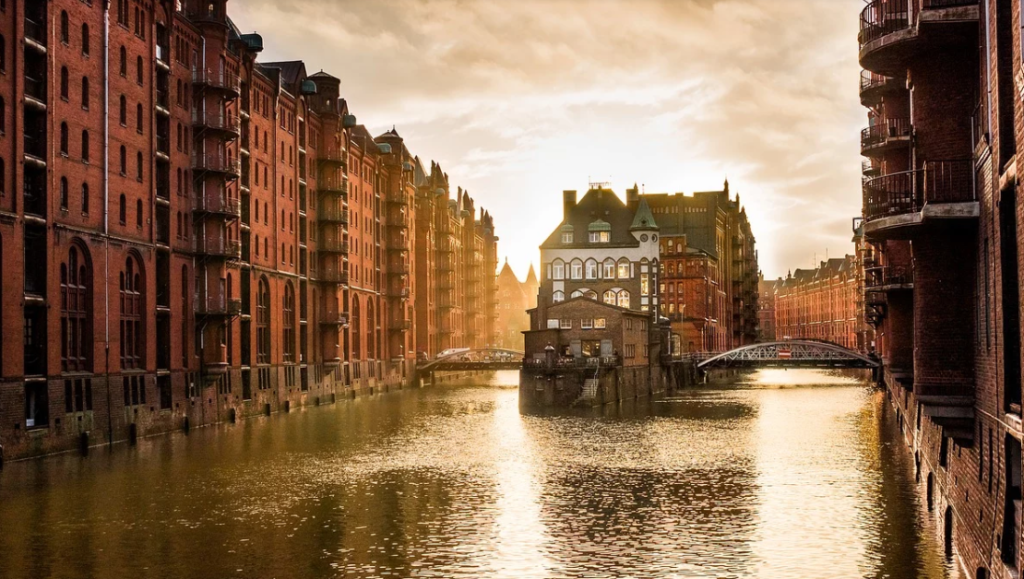
The Rathausmarkt market in front of Hamburg’s town hall is run by Roncalli, a traditional circus, which explains the vintage carousel feel and the brass quartet playing daily. The organic Glühwein is made to a recipe developed specifically for this market. It’s open daily 11 am–9 pm, 23 November – 23 December 2026.
Hamburg runs dozens of other markets. Santa Pauli on the Reeperbahn is the cheeky, adults-oriented alternative, and the Winterwald at Jungfernstieg puts market stalls right by the Inner Alster lake.
Berlin – the city of a hundred markets
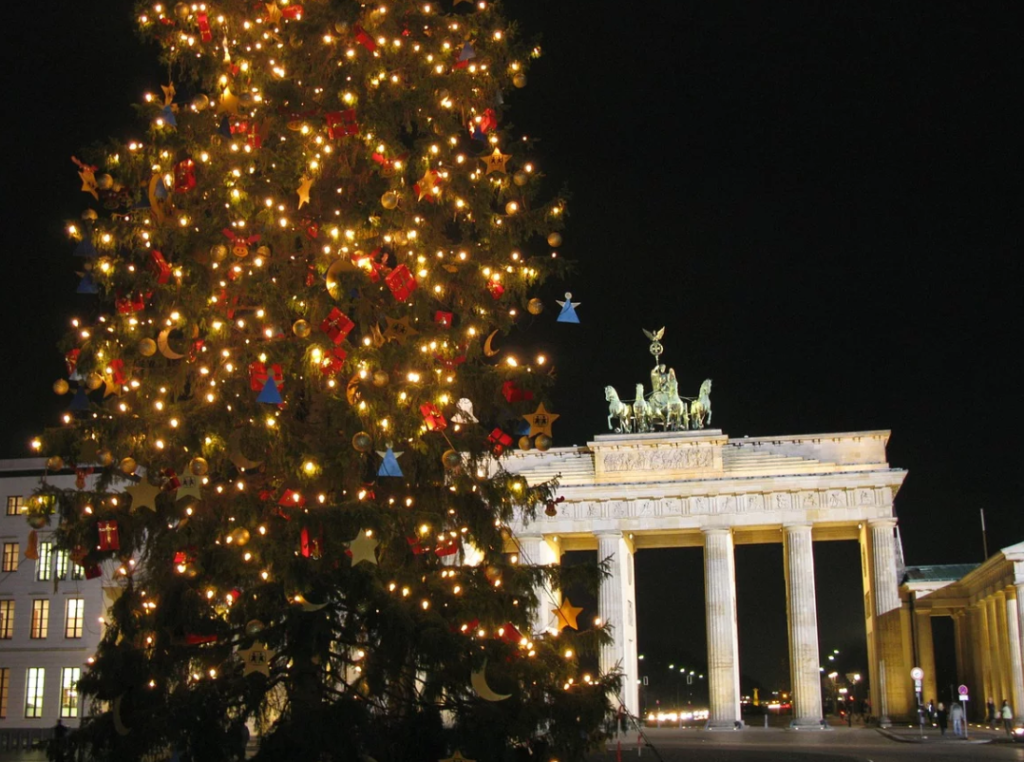
Berlin has no single “main” market; it has dozens, each with a different crowd. The Scandinavian-themed Lucia market at the Kulturbrauerei in Prenzlauer Berg (23 November – 22 December) is a local favourite for its Nordic food and red-brick brewery courtyards. The historic market on the RAW site in Friedrichshain leans medieval and alternative, while the market at Gendarmenmarkt is the city’s classic, grand-square experience. Berlin and Dresden are about two hours apart by train, so they pair naturally.
Big cities give you scale. The next three give you atmosphere.
Small-Town and Offbeat Christmas Markets Worth the Detour
When the Saturday crowds at Cologne cathedral get too much, these smaller markets are the antidote.
Ravenna Gorge (Ravennaschlucht) – the Black Forest showstopper
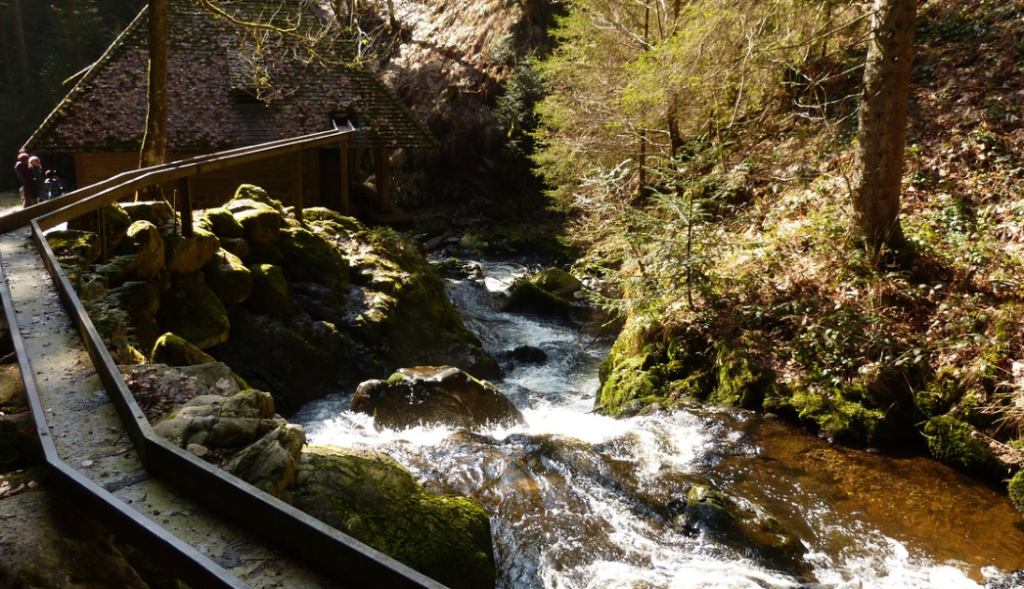
This is the market social media found. About 40 stalls sit at the base of a 40-metre stone railway viaduct in the Black Forest, roughly 30 km east of Freiburg near Breitnau. Lit-up trains on the Höllentalbahn line rumble across the arches above while you drink Glühwein in the gorge below.
Two things catch first-timers out. The market opens only on weekends (Friday to Sunday) from late November to mid-December, and entry works on timed tickets bought online in advance – weekend slots sell out early. Check the official Ravennaschlucht website for 2026 time slots and shuttle bus details before planning around it.
Esslingen – a medieval market with fire-eaters
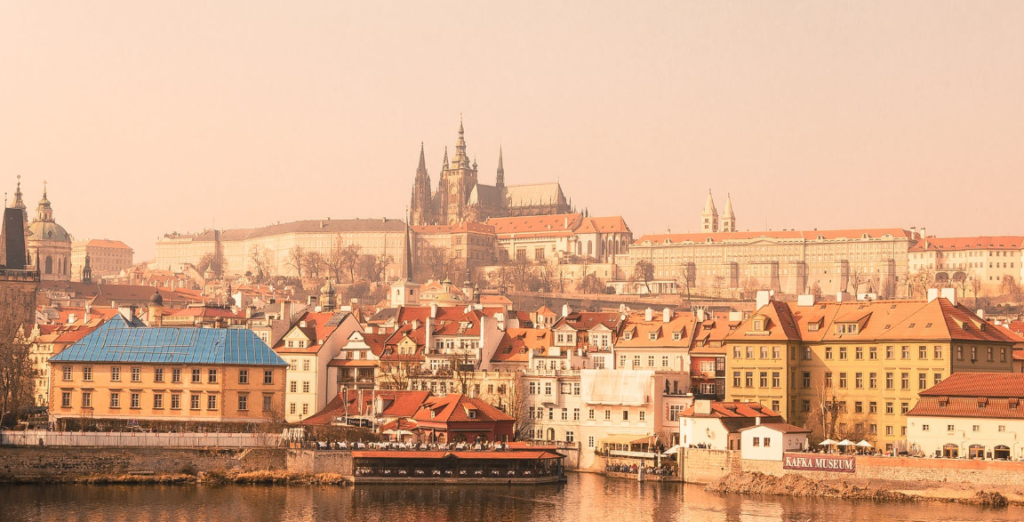
Fifteen minutes from Stuttgart on S-Bahn line S1, Esslingen runs a combined medieval and Christmas market with around 180 stalls. Blacksmiths, rope makers, glass blowers and broom binders work in front of you; jugglers and fire artists perform after dark; vendors wear period costume. Wash down a flatbread fresh from a wood oven with Met (mead, the honey wine of the Middle Ages).
2026 dates: 24 November – 22 December, 11 am–8:30 pm (until 9:30 pm on Fridays and Saturdays).
Magdeburg – a city lit up for the season
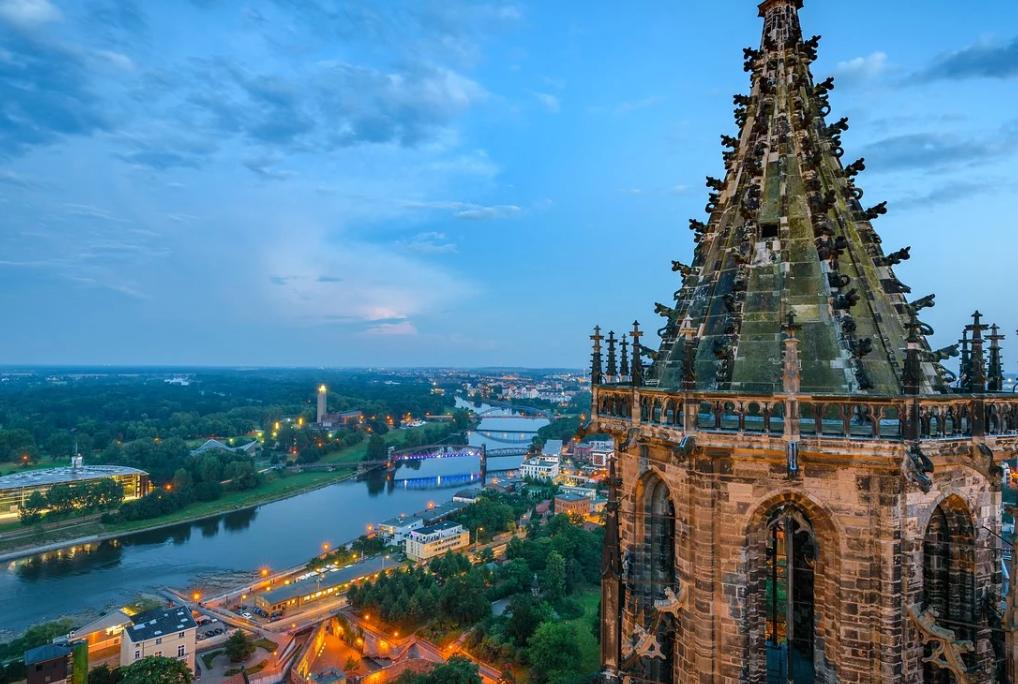
Magdeburg is the surprise package on this list. Its market fills the Alter Markt in front of the old town hall and stretches toward the cathedral square, with more than 140 stalls and around 50 varieties of Glühwein. Highlights include a 38-metre Ferris wheel, the walk-through wooden “Kaiser-Otto-Pfalz” (a nod to Emperor Otto the Great, who is buried in Magdeburg Cathedral) and an ice rink.
The real draw is the Lichterwelt (World of Lights): around 1.2 million LEDs and more than 80 illuminated figures spread through the city centre, free to visit and usually lit until early February.
2026 dates: 19 November – 29 December. Open Sunday–Thursday 11 am–9 pm and Friday–Saturday until 11 pm; closed on 22 November (Totensonntag) and on 24 and 25 December. The ice rink runs until 10 January 2027.
Aachen – Printen at the gates of Charlemagne’s cathedral
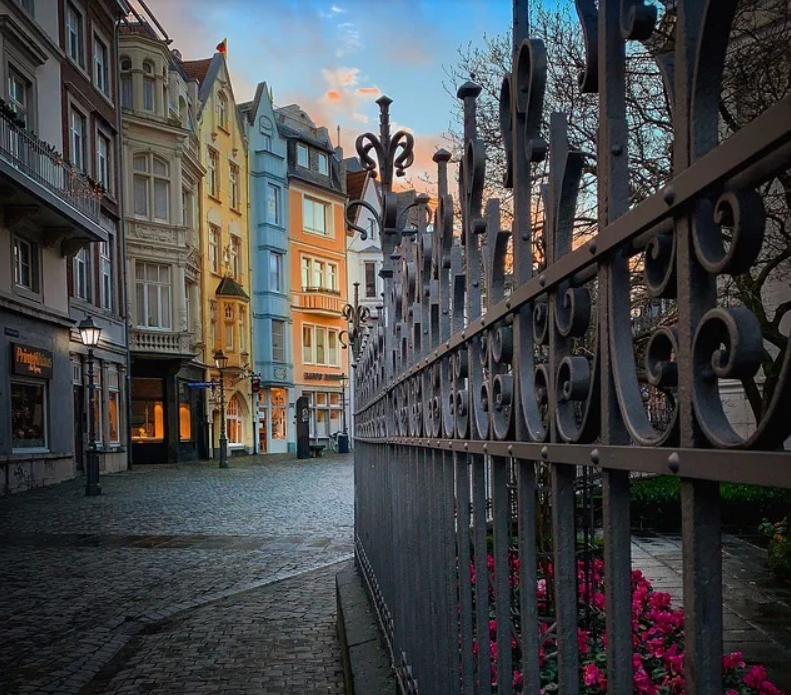
Aachen sits where Germany meets Belgium and the Netherlands, and roughly a third of its market visitors cross a border to get there. More than 120 stalls wrap around the Münsterplatz, Katschhof and Markt, between the town hall and the UNESCO-listed cathedral where Charlemagne is buried.
The one thing to buy is Aachener Printen – a firm, spiced gingerbread sweetened with beet syrup, a local speciality protected by EU origin rules. Try it plain, chocolate-glazed or with almonds; bags start from around €3. Pair it with a Feuerzangenbowle and a plate of Reibekuchen (potato fritters) with apple sauce.
2026 dates: 20 November – 23 December, daily 11 am–9 pm. Exceptions: Totensonntag (22 November) opens only from 6 pm, Saturday 12 December runs until 10 pm, and the last day closes at 8 pm.
Heidelberg Christmas Market
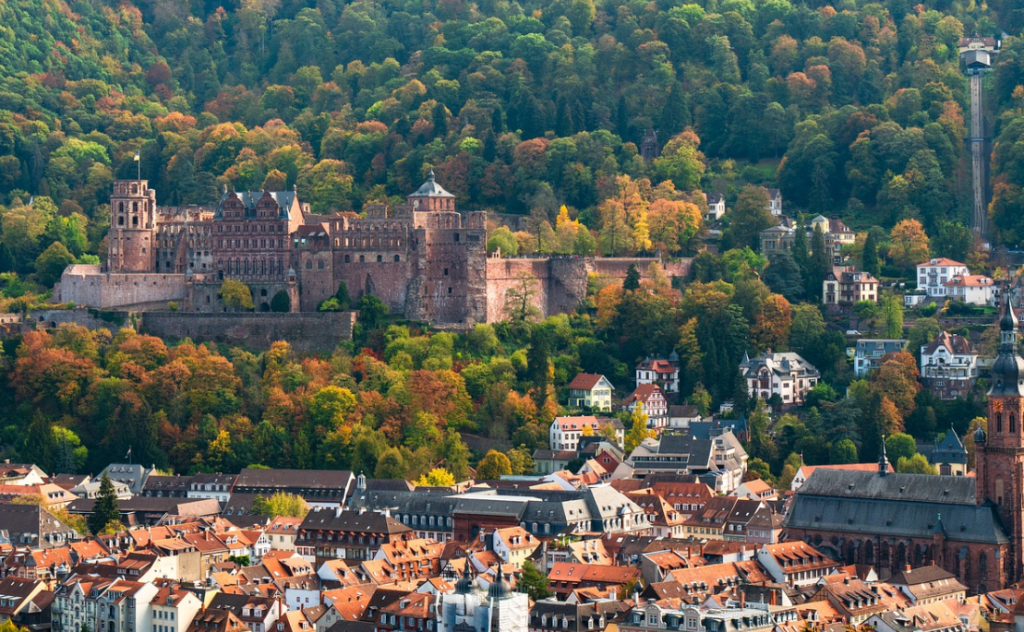
Heidelberg spreads its market across six squares in the old town – Marktplatz, Universitätsplatz, Kornmarkt, Karlsplatz, Anatomiegarten and Bismarckplatz – all strung along the Hauptstraße, one of Europe’s longest pedestrian streets. More than 140 stalls line the route, so you can walk the whole market in one slow evening.
Two spots stand out. On Karlsplatz, an ice rink sits directly beneath the floodlit castle ruins – skate rental is available, and entry is charged separately. On Kornmarkt, the Winterwäldchen (little winter forest) fills the square with more than 100 illuminated fir trees. Families should look out for the historic carousel, more than a century old.
2026 dates: 23 November – 22 December, Sunday–Friday 11 am–9 pm, Saturday until 10 pm. The Bismarckplatz market and the Winterwäldchen stay open until 1 January 2027.
Rothenburg ob der Tauber – the Reiterlesmarkt
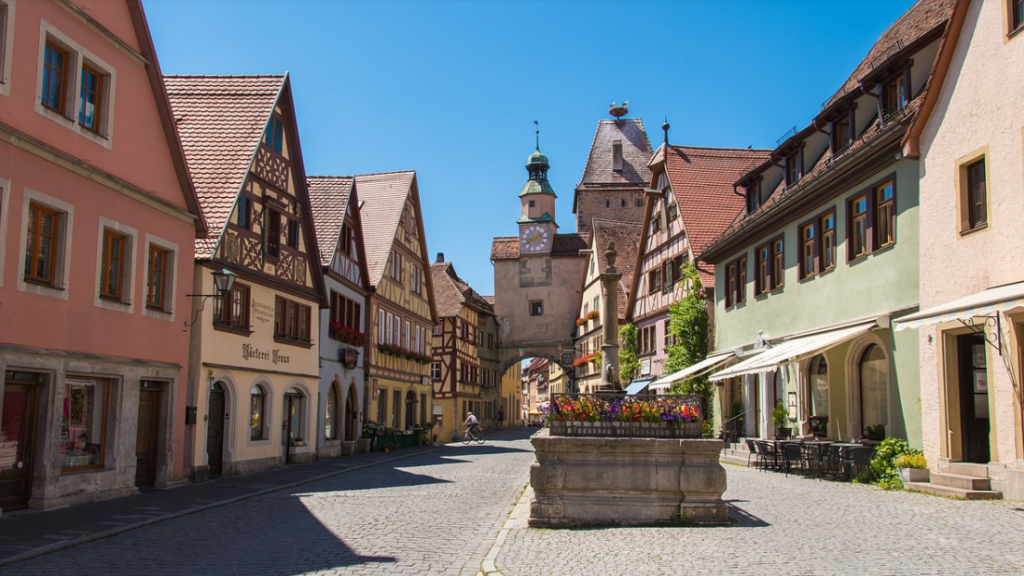
Rothenburg’s walled medieval town has barely changed in 500 years, and its Reiterlesmarkt is named after the “Reiterle”, a mythical horseman from local folklore said to ride through the winter skies. A rider on horseback opens the market each year, and the Christmas tree on the Marktplatz is lit straight after. Around 60 stalls spread over the Marktplatz, Grüner Markt and Kirchplatz, with brass bands playing daily.
Each evening in Advent, a newly decorated window opens on the town hall’s second floor – a live Advent calendar made by local schoolchildren. And you can’t leave without a Schneeball: a ball of fried pastry strips dusted with sugar or dipped in chocolate.
2026 dates: 20 November – 23 December. Rothenburg sits on the Romantic Road, so it works well as a stop between Würzburg and Munich. Stay overnight: the town is at its best after the day-trip coaches leave.
Confirm their 2026 dates on the official city tourism sites closer to the season.
Now, let’s put all of this on a calendar.
2026 Christmas Market Dates, Food and a 7-Day Route
German Christmas markets 2026 – confirmed dates at a glance
| Market | City | 2026 Dates |
|---|---|---|
| Cathedral Christmas Market | Cologne | 16 Nov – 23 Dec |
| Christmas Market | Magdeburg | 19 Nov – 29 Dec |
| Christkindlmarkt | Munich | 20 Nov – 24 Dec |
| Reiterlesmarkt | Rothenburg ob der Tauber | 20 Nov – 23 Dec |
| Aachen Christmas Market | Aachen | 20 Nov – 23 Dec |
| Frankfurt Christmas Market | Frankfurt | 23 Nov – 22 Dec |
| Heidelberg Christmas Market | Heidelberg | 23 Nov – 22 Dec |
| Rathausmarkt (Roncalli) | Hamburg | 23 Nov – 23 Dec |
| Lucia Christmas Market | Berlin | 23 Nov – 22 Dec |
| Medieval & Christmas Market | Esslingen | 24 Nov – 22 Dec |
| Striezelmarkt | Dresden | 25 Nov – 24 Dec |
| Stuttgart Christmas Market | Stuttgart | 25 Nov – 23 Dec |
| Ravenna Gorge (Thu–Sun only) | Breitnau, Black Forest | 26 Nov – 20 Dec |
| Christkindlesmarkt | Nuremberg | 27 Nov – 24 Dec |
Dates as announced by organisers for 2026; recheck the official site a week before you travel.
The sweet spot: 30 November – 18 December
Every market in the table is open between these dates. Go Monday to Thursday if you can – Saturday evenings at Nuremberg and Cologne are shoulder-to-shoulder.
What to eat and drink
- Glühwein – mulled red wine with cinnamon, clove and orange. Expect to pay around €4–5 a mug in 2026, plus a Pfand (cup deposit) of about €3. Return the mug to get the deposit back, or keep it as a souvenih – each market designs a new one every year.
- Feuerzangenbowle – Glühwein with a rum-soaked sugar cone set alight above it. Theatrical and strong.
- Kinderpunsch – the alcohol-free fruit punch for kids and non-drinkers.
- Bratwurst, Kartoffelpuffer and Flammkuchen – sausage, crispy potato pancakes with apple sauce, and thin Alsatian-style flatbread.
- Gebrannte Mandeln – almonds roasted in sugar and cinnamon. You’ll smell them before you see them.
Vegetarian and vegan visitors are well served at the big markets: look for potato pancakes, roasted chestnuts, crêpes, Käsespätzle (cheese noodles) and, increasingly, plant-based sausages.
A 7-day route that doesn’t backtrack
- Days 1–2: Frankfurt – arrive, recover, Römerberg and Paulsplatz in the evening.
- Day 3: Cologne – about 1 hour by ICE high-speed train; cathedral market, Heumarkt and the harbour.
- Day 4: Stuttgart + Esslingen – afternoon in Esslingen, evening rooftops in Stuttgart.
- Day 5: Rothenburg ob der Tauber – a slow, small-town day; stay overnight.
- Day 6: Nuremberg – the benchmark.
- Day 7: Munich – just over an hour by ICE from Nuremberg; Marienplatz and the Kripperlmarkt.
Flying out of Berlin instead? Swap Rothenburg for Dresden and finish in the capital. Book Deutsche Bahn saver fares early – prices rise as seats fill, and the Munich–Nuremberg route gets packed in December.
At a Glance: Best Christmas Markets in Germany
- Best time to visit: 30 November – 18 December 2026, ideally Monday–Thursday evenings.
- Typical costs: Market entry is free almost everywhere (Ravenna Gorge is the main exception). Glühwein around €4–5 plus a ~€3 cup deposit; a sausage in a roll typically €4–6.
- How to get there: Fly into Frankfurt or Munich, Germany’s main international hubs, then travel between markets by ICE trains. Most city markets are a short walk or tram ride from the main station.
- Entry requirements: Germany is in the Schengen Area. Check whether your nationality needs a visa or travel authorisation well before you book.
Do’s
- Carry some cash in small notes – many stalls still prefer it.
- Return your mug to a stall from the same market to get your Pfand back.
- Dress in layers with gloves and waterproof shoes; December evenings typically sit around 0–5°C.
Don’ts
- Don’t plan market-hopping on Christmas Day – most markets close on 22, 23 or 24 December.
- Don’t turn up at Ravenna Gorge without a pre-booked timed ticket.
- Don’t linger at the counter after you’ve been served – step aside so the queue keeps moving.
FAQ
Q: When do German Christmas markets open in 2026? A: Most open between 16 and 27 November 2026. Among the big names, Cologne’s cathedral market opens first on 16 November, Munich on 20 November (earlier than in past years), Dresden on 25 November and Nuremberg on 27 November. Most close on 22, 23 or 24 December, though some Cologne markets run into early January 2027.
Q: Which is the best Christmas market in Germany? A: Nuremberg’s Christkindlesmarkt is widely seen as the best Christmas market in Germany for its strict focus on traditional, regional goods and its candlelit opening ceremony. Dresden’s Striezelmarkt is the oldest, dating to 1434, and Cologne offers the most variety with seven markets close together. For atmosphere, small-town Rothenburg ob der Tauber is hard to beat.
Q: How many days do I need to see the best Christmas markets in Germany? A: Seven days lets you visit five or six of the best Christmas markets in Germany without rushing – for example Frankfurt, Cologne, Stuttgart, Rothenburg, Nuremberg and Munich by train. With only three or four days, stick to one region: Munich, Nuremberg and Rothenburg in Bavaria, or Cologne and Frankfurt in the west.
Q: Do German Christmas markets stay open after Christmas? A: Most traditional markets close by 24 December, and many by the 22nd or 23rd. Some keep going as “winter markets”: in 2026, Cologne’s Harbour market runs until 3 January 2027 and its Heumarkt market with ice rink until 10 January 2027. Berlin also has several markets open until around New Year.
Q: What should I buy at a German Christmas market? A: Look for regional specialities: Nuremberg Lebkuchen in a decorative tin, a sealed Dresdner Christstollen, hand-carved wooden nutcrackers and smoker figures from the Erzgebirge, glass baubles, beeswax candles and Aachener Printen. The souvenir Glühwein mug, which changes design every year, is the classic free-with-deposit keepsake.
Q: Are German Christmas markets safe? A: Yes. They’re generally safe and family-friendly, and large markets now have visible police presence and vehicle barriers. The main risk is pickpocketing in dense crowds, so use a cross-body bag, keep your phone and wallet in front pockets, and avoid peak Saturday evenings at the busiest markets if crowds make you uneasy.
Your Christmas Market Plan Starts Now
The trick to Germany in December isn’t seeing more markets. It’s seeing the right ones at the right moment – Nuremberg on a weekday evening, Dresden with a Stollen under your arm, Rothenburg after the coaches leave, the Ravenna Gorge with a train rumbling overhead. Pick your window between 30 November and 18 December, book the trains and hotels now, and leave room for one market you didn’t plan to visit.
Return the mug and get your deposit back – or keep it, and take Germany home in your hand luggage.
All rights reserved.
